
I’ve bonded pairs of bunnies 3 times and am now in the middle of bonding my first trio. Every bonding experience has been slightly different, but some advice holds true for all of them.
My Top 5 Tips & Tricks:
1. Do a Speed Date First
Allowing bunnies to meet for the first time in a small, neutral space will help you find a more compatible match and help make the bonding process easier for everyone. A successful first date is one where no super aggressive behavior happens, like lunging or immediate bunny tornados. Sometimes bunnies will “fall in love” on a first date, but do not expect it. Bunnies that can co-exist for 5+ minutes in a small pen without any super aggressive behavior can typically be bonded. If you know a local rescue that does speed dates, you could arrange for a few dates with different bunnies to see if your bunny connects with any of them more than the others.
2. Allow the Bunnies to Set the Pace
Some bunnies will be ready to start bonding as soon as you bring the new one home, and some may need time to adjust to the change. If the new bunny is anxious or nervous, we recommend working on the human-animal bond with them first, understanding their likes and dislikes and creating a safe environment for them to open up and do more of their normal bunny things.
3. Cuddles are Good for Everyone
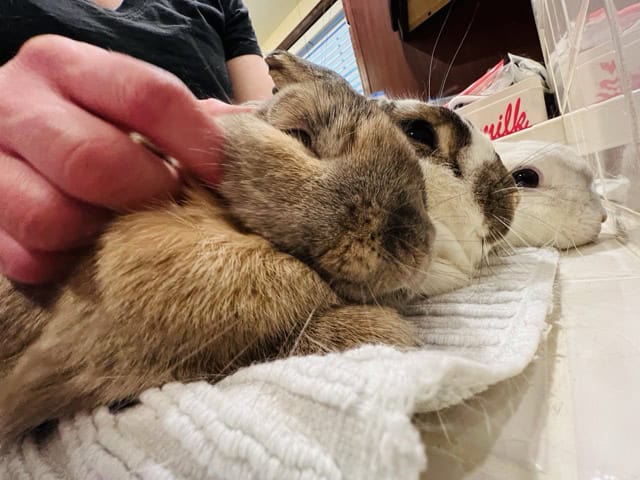
Sometimes it’s called “forced cuddles” and sometimes “bunny magic”, but whatever you want to call it, it’s one of our favorite parts of bonding and a great way to gently allow bunnies to get to know each other. We typically do the cuddles outside of the bonding pen, on a small towel on a table or countertop.
Put both rabbits on the towel, facing the same direction and squish them together as you pet both of them front to back with your hands. Be ready for one to nip, as this occasionally happens when you are starting out but will usually stop once they get better acquainted. If they try to move out of the squish, gently squish them back together.
Do it for as long as it takes for the bunnies to relax, typically 5-10 minutes. This is also our favorite way to calm bunnies that have to be split apart during a bonding session. You can end the date on a good note with cuddles or do the cuddles and once everyone has calmed down, try time in the bonding pen again. Cuddles are also great for the people doing the bonding, much more pleasant than stress bonding techniques like driving them around in a carrier.
4. Start with a Small Neutral Space and Gradually Expand
We started using this technique bonding Lucy with Henry after finding a group online that swears by it and have seen really good results. We like to use a Midwest Exercise Pen and start small with a 1 panel x 1 panel setup (2′ x 2′) with pee pad underneath (you can add fleece on top of it if you like) and then gradually expand the pen in the same neutral area.
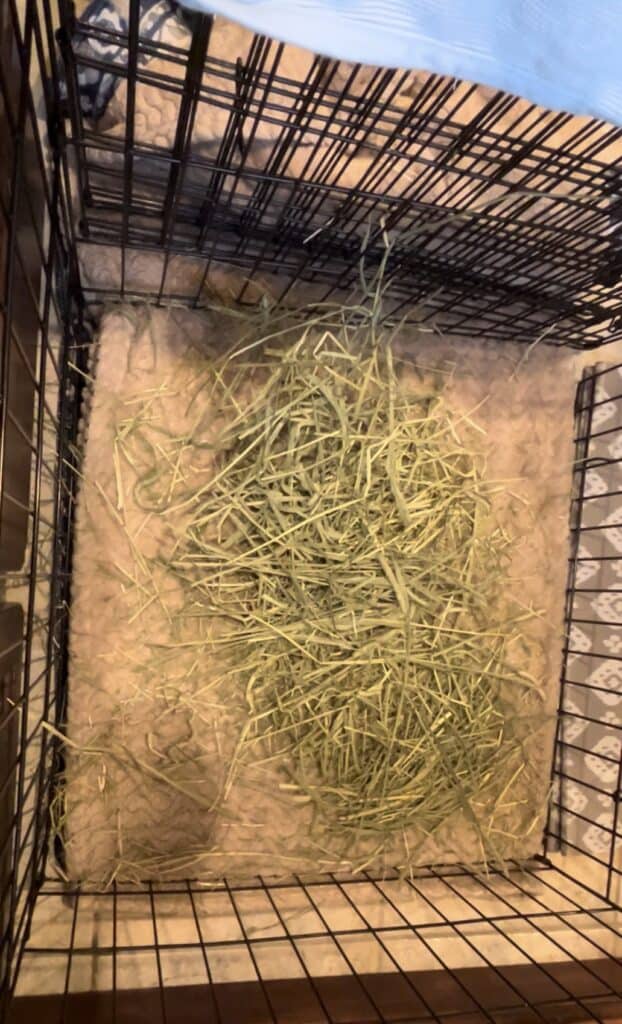
When we start out, we just add hay, no water because they won’t really much and it will make a mess if things get rowdy. Eating is a bonding activity, so the hay encourages them to eat together and share that experience. Once they don’t have any more bad behavior in the 1×1 pen, you can move up to 1×2, then when they do well there, 2×2, etc.
Some people recommend using oven mitts but we like to use a towel or small blanket to break up a scuffle. We cover one bunny with the blanket and both will temporarily freeze so you can pull out a bunny. Eventually they learn what happens when you raise the blanket and sometimes you don’t even need to use it.
5. Be Patient and Consistent
When you are bonding, it is important to do regular dates (daily or more frequent if possible). We like to have a side by side setup for the bunnies so they can get to know each other outside of bonding time. If you are doing a side by side setup, make sure to use 4′ pens or cover them so they cannot get into each other’s pens unsupervised. Some bunnies may even be able to get over 4′; if you are doing a bonding trial with a bunny from a rescue, their foster will likely be able to advise on how likely the bunny can get over 4′. You should leave a 4-6″ gap between pens or 1/2″ hardware cloth or C & C grids between pens backed up against each other to prevent biting through the pens.
Generally we advise starting slow with shorter dates, no longer than a half hour. Sometimes the bunnies won’t even make it a minute before they scuffle so the initial dates may be super short. It can be scary, but your job is to supervise and keep the bunnies from hurting each other (and hopefully avoiding get bit by one when you break up a scuffle). If you stay consistent – not going more than a day or 2 between dates but daily if possible – and gradually allow them to have longer and longer dates, you will see progress and eventually they will have a ‘breakthrough’ and the negative behavior will become less and less frequent until you don’t see any negative behavior anymore (and maybe even some flops and binkies!).
Once we are confident they are getting along well for 6+ hours in a larger, expended area (at least 4’x6′), we will do a supervised overnight sleepover. If the bunnies make it through the overnight without waking us up to break up a scuffle, we move then into a “starter home”, about the same size as the final stage of bonding but in part of in their permanent living area. We keep an eye on them, usually not leaving them alone for very long but here and there to see how they do. Having someone that can work from home and/or a bunny camera can be helpful with supervising.
Once they make it 1-2 weeks in that space, we expand out and give them their full space to free roam.
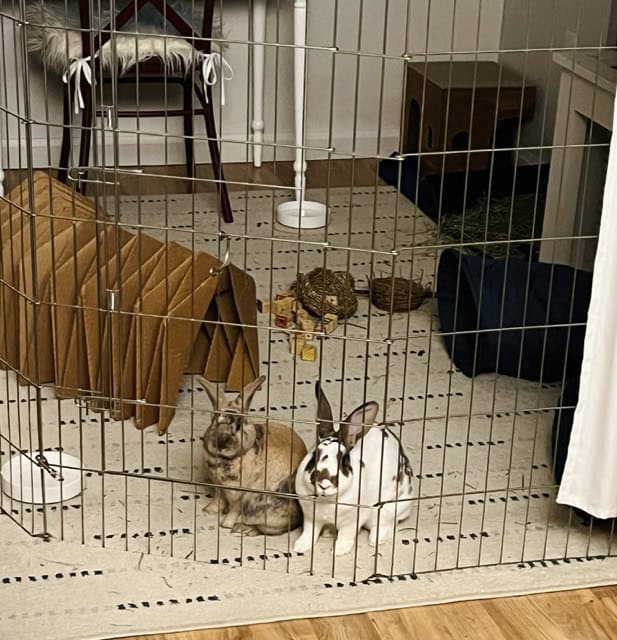
Check out our Instagram for story updates on how bonding a 3rd bunny with Lu & Stu is going!
If you’re new to bonding or could use a little help, we’re here to help. Email us or text us at (503) 332-5617 with your questions or to set up a speed date at our shop if you’re in the Portland, OR area.